About us

We are redefining aircraft propulsion to make flight cleaner.

Towards aviation decarbonization

We are a turbomachinery company with a single ambition: to decarbonize aviation from within the engine itself.

Based in Toulouse Blagnac, at the very heart of Europe's aerospace ecosystem, we work across the full spectrum of turbomachinery. We design world class turbines and raise the efficiency of those already flying through our heat exchanger retrofits.

The result is a family of solutions that are simple, efficient and ready to fly, cutting both CO2 and non CO2 emissions without compromising performance.

Viraj Aero is built for those who believe that progress doesn’t have to wait.

Our expertise

Heat exchangers

We design lightweight, durable heat exchangers with patented geometries to capture the energy an engine wastes and turn it into efficiency.

Turbomachinery

From compressor to combustion chamber and turbine, we master the full design of turbomachines for complete control and true sovereignty.

Steam-injection

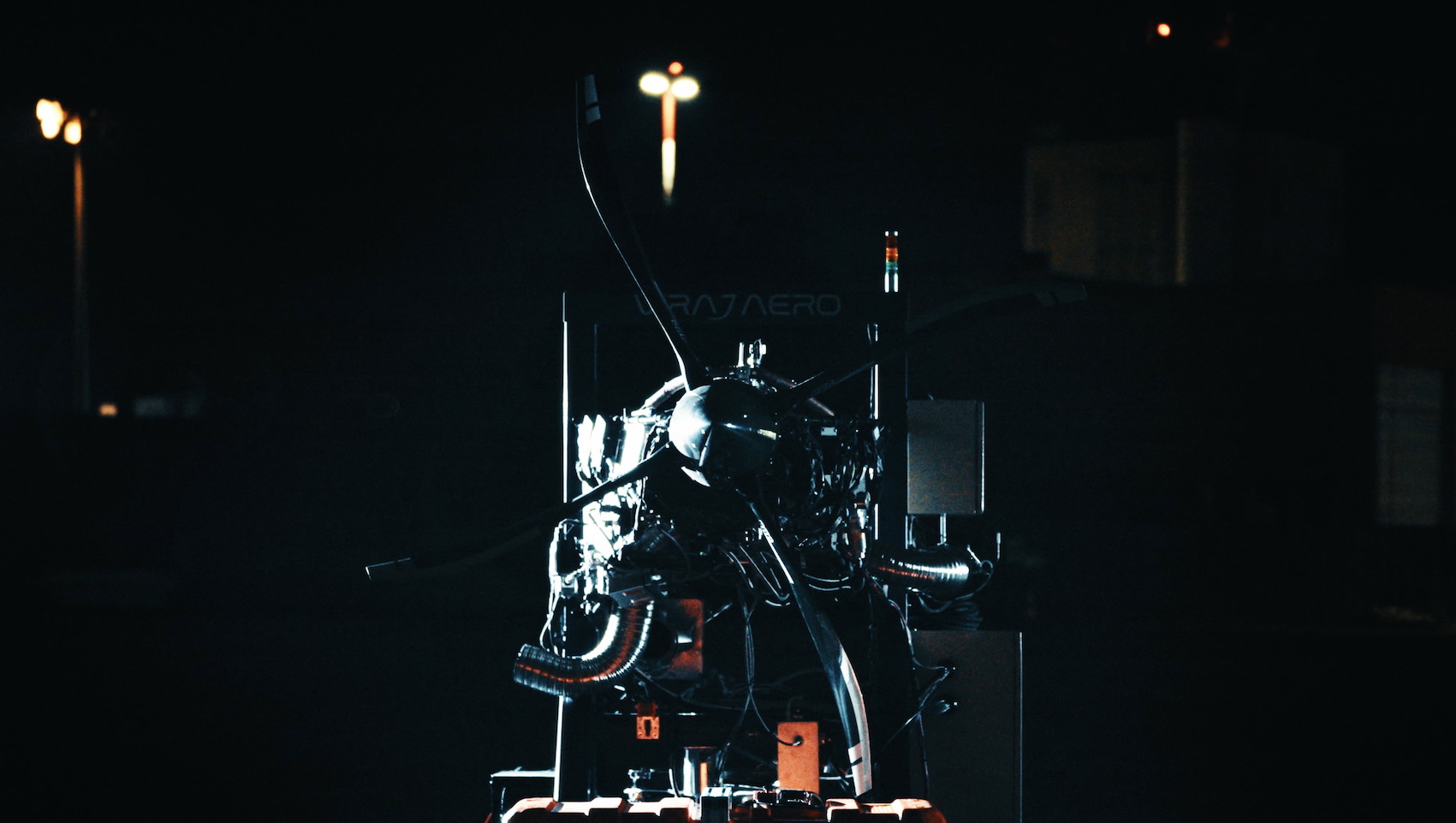
Our flagship. Long proven in ground turbines, steam injection had never taken to the air. We are the first to bring it to aviation, making turbines significantly more efficient while cutting both CO2 and non-CO2 emissions.
Support

Frequently Asked
Questions

What is the technology behind Viraj Aero ?
Viraj Aero leverages a principle called steam injection, a technology already widely used in ground-based power generation turbines since the 1980s. With a patent technology, we adapt this proven principle to aviation and offer the first steam injection turbine.
How much environmental impact can Viraj Aero reduce?
Our system enables up to 30% fuel savings and reduces total climate impact by up to 50%, all without changing fuels. It directly addresses non-CO₂ effects, including oxyde nitrogen (NOx) and contrail formation, which together represent over 60% of aviation’s climate footprint.
When will we see it in the sky?
Our first product is planned for 2029, starting with light aircraft. Larger regional aircraft will follow in 2031, bringing cleaner aviation within reach.